How to make Facebook ads for home and living brands with AI
Home and living ads on Facebook work when the viewer can picture the product in their own home. Show it in a real room at the right scale, name the problem it solves or the feeling it adds, and give one reason to buy now. Many home products cost enough that people think before they buy, so the ads that keep running often lean on proof: reviews, comparisons and close-ups of the materials.
Mockingbird remakes winning home and living ads in your brand. Paste your website and it pulls in your brand name, colours and real product photos, and writes a voice profile from your site. Pick an ad from the library, press remake, and get the same layout with your lamp, rug or storage box in it, ready to upload to Ads Manager.
When you want more angles than the library suggests, Make me ads gives you 1 to 10 new concepts at once, each on its own angle, with no reference ad needed.
25 winning home and living ads in the Mockingbird library, each approved by hand. A few of them:
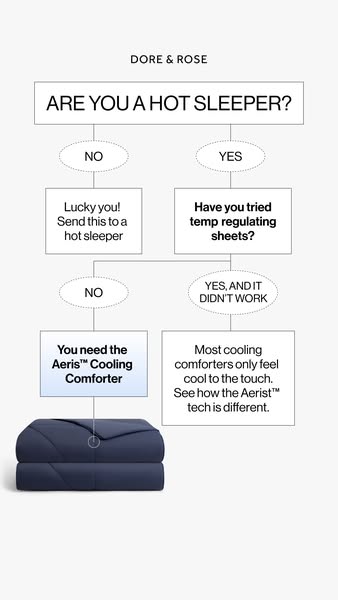
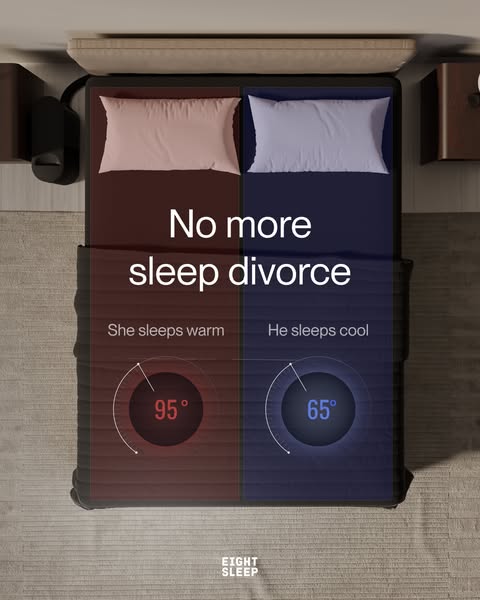

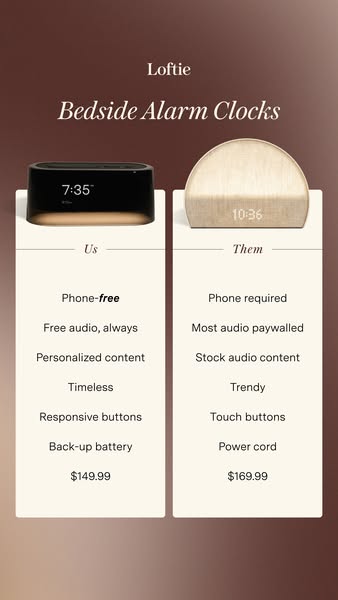


Ad angles that work for home and living
- Problem
- Name the everyday annoyance. A storage brand might run 'The cupboard you avoid opening' over a crammed shelf beside the same shelf sorted into its boxes. A before-and-after of a room or a cupboard is a clear way to show a home product working.
- Demonstration
- Show the product doing its job: the sofa bed folded out, the blackout blind at midday, the non-stick pan releasing an egg. One clear frame of the product in use answers the question the viewer is about to ask.
- Aspiration
- Sell the finished room. A bedding brand might show the made bed in morning light with 'Hotel bed, at home', keeping the product large enough that the texture reads on a phone.
- Comparison
- Set your product against what the customer would buy otherwise. A mattress brand can compare its materials or guarantee with the usual high-street option, as long as every point is accurate.
- Social proof
- Customer photos of the product in real homes show it in rooms that look like the viewer's own. Ask each customer for permission, and pair the photo with a line from their review.
Showing scale, colour and materials
Returns in homeware often come down to size and colour. Put the product next to something familiar so the viewer can judge its size, and keep colours true to the real item. When size matters, add the dimensions to the primary text.
Use your real product photos rather than a rendered lookalike, because customers compare the ad with what arrives. Room shots sell the feeling and close-ups sell the quality, so test both for the same product before you decide which to scale.
Claims to watch in home and living ads
Green and safety claims need the most care. 'Eco-friendly', 'non-toxic' and 'sustainable' are vague unless you say exactly what you mean, and the UK's Competition and Markets Authority has published a Green Claims Code that expects claims to be specific and backed by evidence. Write 'made from recycled polyester' rather than 'eco-friendly'.
Price claims matter too. A 'was' price should be a price you genuinely charged, and a countdown timer should count down to a real deadline. Meta's advertising standards also reject misleading claims in general, so check its current standards as well as the consumer law where you sell.
Frequently asked questions
- How do I make Facebook ads for homeware?
- Show the real product in a room at the right scale, lead with one problem it solves or one feeling it adds, and build the ad at 1080 by 1350 pixels for the feed. Test room shots against close-ups and keep what sells.
- Will an AI ad generator show my product accurately?
- It should, if it works from your real photos. Mockingbird uses the product photos from your website, so the shape, colour and material come from your own images. Check every ad against the real item before it runs.
- Which hook types work for home and living brands?
- Problem, demonstration, aspiration, comparison and social proof hooks all suit the category. A before-and-after of a room is a common form of the problem hook.
- Are before-and-after images allowed in home ads?
- Meta's before-and-after restrictions focus on health and appearance products, so a room transformation is generally treated differently. Keep both photos real, show the same space, and check Meta's current standards if you are unsure.
- Should I show the price in homeware ads?
- Test it both ways. A visible price filters out people who would not pay it, so you may get fewer clicks from buyers who are more likely to order. The break-even ROAS calculator tells you what each sale needs to earn.
Keep reading
How to make ecommerce ad creative that sells
Product-ad angles that convert, and how to show your product so it sells.
How to test Facebook ad creative: a simple framework that works
What to test first, how many variations, how to judge, and how to keep the pipeline full.
Break-even ROAS calculator
The ROAS and CPA where your ads stop losing money.